

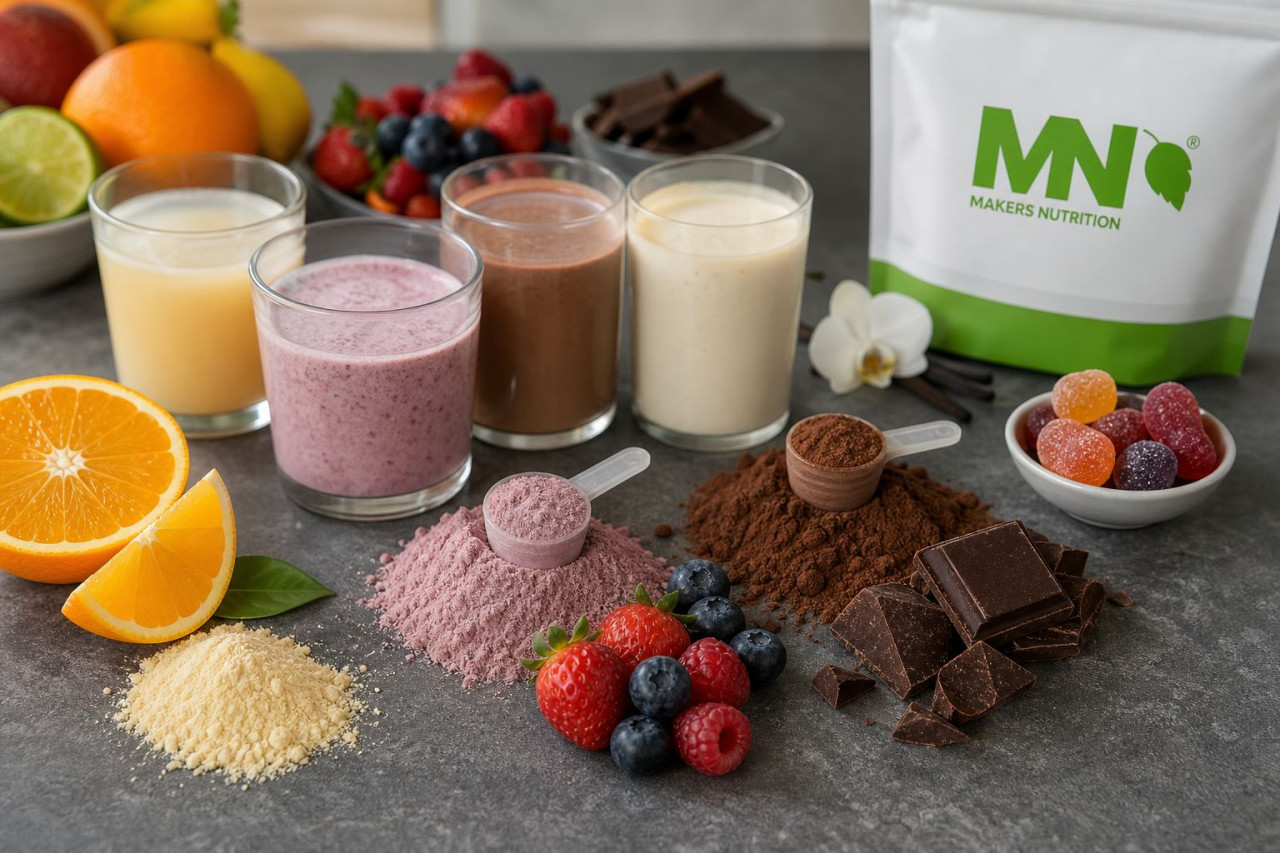
When consumers choose a dietary supplement, they are looking for more than an impressive ingredient list. They are also thinking about the experience of taking the product. Does it taste good? Is it something they will actually look forward to using every day? Does the flavor match the type of product they are buying?
For health brands developing powders, gummies, chewables, and other flavored supplements, flavor can play a surprisingly important role in the success of a finished product.
A great formula with an unpleasant taste can be a difficult sell. A well-formulated supplement with a familiar, enjoyable flavor can create an entirely different experience for the consumer.
That is why flavor selection should happen early in the supplement manufacturing process, rather than being treated as an afterthought.
The Flavor Has to Fit the Formula
Not every flavor works with every supplement.
A fruit flavor may be excellent for a powdered drink mix but completely out of place in a vitamin gummy designed around a dessert-inspired concept. Chocolate may complement a protein or wellness powder but not necessarily a citrus-based formula. Even two products using the same flavor may require completely different flavor systems depending on their ingredients.
Some dietary ingredients naturally bring strong, bitter, earthy, sour or mineral-like notes to a formula. Others may have very little taste at all. The flavor system needs to work with those characteristics rather than simply covering them up.
This is where product development becomes particularly important.
At Makers Nutrition, flavor selection can be considered alongside the formula, dosage, delivery format, sweetener system and intended consumer experience. The goal is not simply to make a supplement taste sweet. It is to create a flavor profile that makes sense for the product.
The Classics Still Matter
There is a reason certain flavors continue appearing across supplement categories.
- Berry is one of the most versatile choices. Strawberry, mixed berry, raspberry, blueberry and blackberry profiles can work across gummies, powders, and chewables. Berry flavors also give brands room to create combinations such as strawberry lemonade or mixed berry citrus.
- Lemon and citrus flavors are another natural fit for supplements. Lemon, lime, orange, grapefruit and combinations such as lemon-lime can provide a bright, refreshing profile. Citrus is especially useful when a brand wants its supplement to feel light and refreshing.
- Tropical flavors can take a product in a more adventurous direction. Pineapple, mango, passion fruit, coconut and combinations such as pineapple-orange or mango-passion fruit can give a formula a more distinctive personality.
Then there are the dessert-inspired favorites.
- Chocolate and vanilla remain familiar choices for products where a creamy, indulgent profile makes sense. Chocolate can work particularly well with protein, collagen and other powder-based products, while vanilla can provide a neutral foundation that pairs with additional flavors.
- Fruit punch also has staying power because it gives manufacturers the ability to build a recognizable fruit-forward profile without limiting the product to one specific fruit.
The important point is that popularity should not be the only consideration. A familiar flavor may attract attention, but the best choice depends on the product itself.
Clean Label Does Not Have to Mean Boring
Consumers increasingly pay attention to what is inside their supplements, including flavors, sweeteners and colors.
For brands pursuing a clean label position, that can make flavor development more challenging. The objective is to create a product that tastes appealing while keeping the ingredient statement aligned with the brand's desired standards.
Natural flavors can be one option to consider. Under FDA labeling rules, natural flavors and artificial flavors can be declared in an ingredient list using those terms, subject to applicable requirements.
However, "natural" should not simply be treated as a marketing shortcut. The FDA has not established a formal regulatory definition of the term "natural" for food labeling, and brands need to make sure their labeling and ingredient choices are appropriate for the finished product.
Clean label development can also involve decisions around sweeteners and colors. A brand may want a bright berry gummy, for example, but also want to avoid certain artificial colors. Depending on the formula, colors derived from fruits, vegetables, spices or other permitted sources may be considered.
The key is developing the flavor, sweetness and appearance as a complete system.
Think Beyond Single Supplement Ingredients
One of the easiest ways to make a supplement feel more distinctive is to move beyond a single-note flavor.
Instead of simply choosing strawberry, a brand could explore strawberry lemonade. Instead of basic orange, it could consider orange mango. Lemon could become lemon berry. Vanilla could become vanilla chai or vanilla cinnamon, depending on the formula and desired ingredient profile.
These combinations can make familiar flavors feel new without forcing consumers into something completely unfamiliar.
Flavor combinations also give health brands an opportunity to develop a recognizable product identity. A brand that consistently uses bright citrus profiles may create a very different impression from one that focuses on creamy vanilla, chocolate, and berry flavors.
The flavor becomes part of the brand.
Delivery Format Changes Everything
Flavor selection should also take the delivery format into account.
A gummy has a different flavor experience from a powder mixed into water. A chewable tablet has different requirements from a liquid supplement. A capsule may not require flavor at all, while a powder can put flavor front and center.
This is particularly important for powdered supplements. The consumer may smell the product before tasting it, see its color in the glass and experience its texture as they drink it. Acidity, sweetness, aroma, solubility and mouthfeel can all influence the overall experience.
Gummies present their own considerations. The flavor has to work with the gummy base and sweetener system while providing enough character to stand out in a small serving.
That is why a flavor that works beautifully in one delivery format may need to be adjusted significantly for another.
Flavor Sampling is Part of Product Development
Reading a list of flavors is one thing. Tasting them is another.
Brands should consider flavor sampling as an important part of the development process. A name like "mixed berry" may sound appealing on paper, but there can be a significant difference between different interpretations of that profile.
One version may emphasize strawberry. Another may lean toward raspberry. A third could have a sweeter, darker berry character.
The same applies to citrus, tropical, and dessert flavors.
Sampling gives brands the opportunity to compare profiles and determine what actually fits their vision. It can also reveal issues that are difficult to anticipate from an ingredient list alone.
This is why it is important to work with a supplement manufacturer that understands the value of flavor sampling. Our team at Makers Nutrition concentrates on your desired flavor profile and will send you samples until we have precisely matched what you have in mind for your product.
Flavor Can Help Create a Better Product Experience
Supplements are products people may take repeatedly. That makes the sensory experience worth considering.
If a consumer dislikes the taste of a powder, they may be less enthusiastic about using it. If a gummy has an appealing flavor and texture, it can become a more enjoyable part of a daily routine.
Of course, flavor alone does not determine whether a supplement succeeds. Formula quality, ingredient selection, packaging, pricing, positioning and manufacturing all matter.
But flavor can be the difference between a product that simply checks a box and one that consumers genuinely enjoy using.
Choosing a Flavor with Your Manufacturing Partner
Developing a supplement flavor is not as simple as selecting an option from a menu.
The final flavor needs to work with the active ingredients, serving size, dosage form, sweetener system, color, texture and desired label. It also needs to make sense for the brand and the consumers it is trying to reach.
That is why working with an experienced supplement manufacturer can make the development process more efficient.
Makers Nutrition works with health brands on private label and custom supplement manufacturing, helping turn product concepts into finished products. From formulation and flavor development to manufacturing, packaging and fulfillment, the process can be managed with the finished product in mind. Our advanced flavor systems allow your brand to sail with the classic flavors, but also venture into somewhat unfamiliar territory with not-so-typical flavors.
Whether the concept calls for a classic strawberry gummy, a refreshing citrus powder, a rich chocolate formula or something more unconventional, the flavor should support the product rather than compete with it.
The Right Flavor Starts with the Right Question
The question is not simply, "What flavor should we use?"
It is, "What flavor makes sense for this product?"
That answer depends on the formula, format, audience, brand identity and overall consumer experience.
Classic flavors such as berry, citrus, tropical fruit, chocolate and vanilla give health brands familiar starting points. More creative combinations can help a product stand apart. Clean label considerations can shape the choice of flavors, sweeteners and colors. And most importantly, flavor sampling allows brands to experience the product before it reaches the market.
In an increasingly crowded supplement industry, every detail matters.
The right ingredients give a product its foundation. The right delivery format determines how consumers use it. The right packaging gets their attention.
And the right flavor can give them a reason to come back for another serving.