

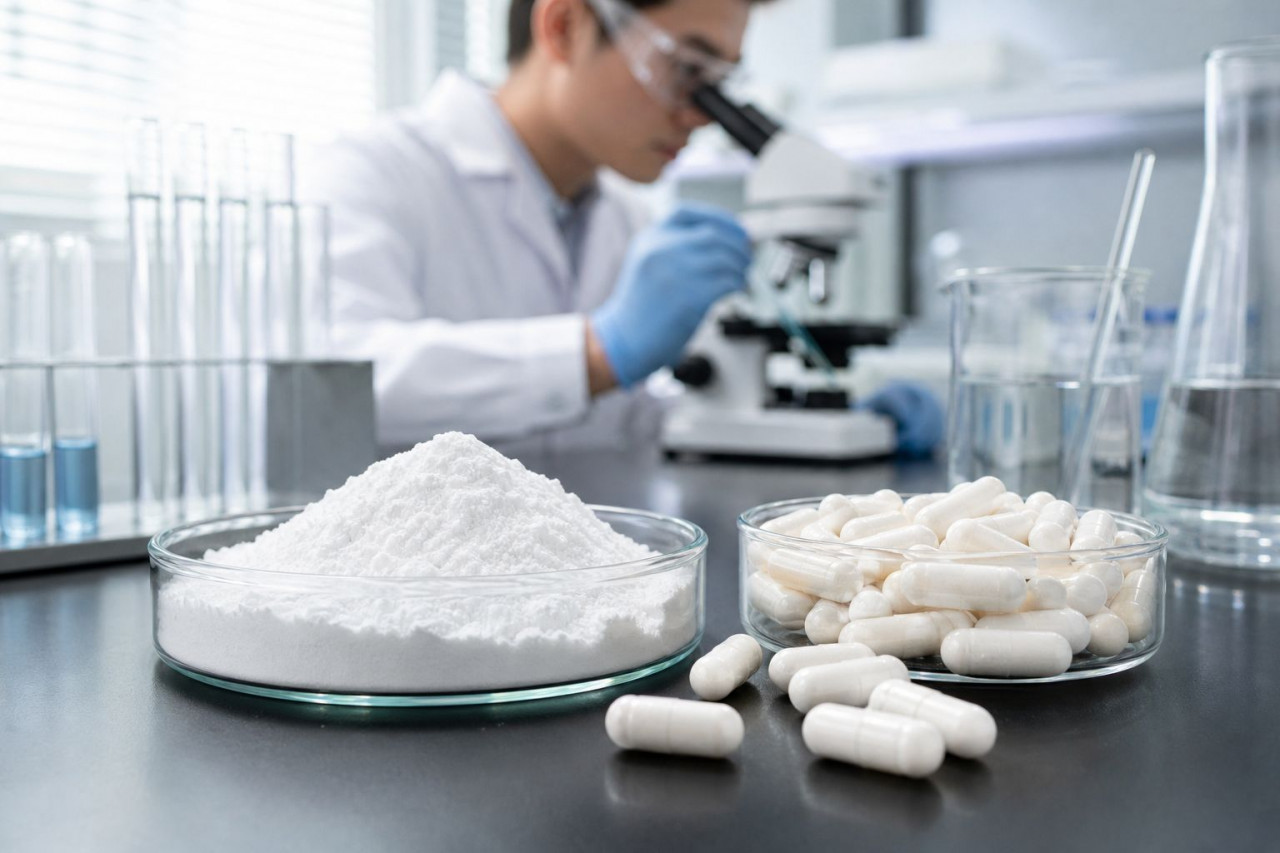
Creatine is one of the most researched and widely used ingredients in the sports nutrition industry. From professional athletes to everyday fitness enthusiasts, consumers have embraced creatine supplements for their ability to support strength, power, and high-intensity exercise performance.
But have you ever wondered where creatine comes from, what creatine is made of, or how creatine supplements are manufactured?
Although creatine occurs naturally in the human body and certain foods, the creatine found in commercial supplements is generally produced through a carefully controlled chemical synthesis process. Understanding this process is important for supplement brands evaluating ingredient quality, manufacturing partners, and product development opportunities.
In this guide, we'll explore everything from creatine's natural origins to industrial production, purity testing, ingredient sourcing, and the different supplement formats available to today's brands.
Where Does Creatine Come From?
Creatine is a naturally occurring compound found primarily in skeletal muscle, where it helps support the body's ability to rapidly regenerate adenosine triphosphate (ATP), an important source of cellular energy.
The human body produces creatine through processes involving the kidneys and liver. Creatine is also obtained through dietary sources, particularly animal-based foods such as beef, pork, and fish.
However, the creatine used in dietary supplements generally does not come from extracting or processing animal muscle tissue.
Instead, commercial creatine is typically manufactured through chemical synthesis using carefully selected raw materials. This method allows manufacturers to produce large quantities of creatine with consistent specifications while avoiding the impracticalities of extracting it from food sources.
The resulting creatine molecule is chemically identical to naturally occurring creatine, making synthetic production an efficient method for supplying the growing sports nutrition market.
What Is Creatine Made Of?
Creatine is a nitrogen-containing organic compound with the molecular formula C4H9N3O2. Although often associated with amino acids, creatine is technically an amino acid derivative rather than a conventional amino acid used to build proteins.
Within the body, creatine synthesis involves three amino acids: arginine, glycine, and methionine.
These compounds participate in a series of biochemical reactions that ultimately produce creatine. Once synthesized, creatine can be transported to tissues, including skeletal muscle, where it contributes to cellular energy metabolism.
Commercial supplement production follows a different chemical pathway.
Rather than reproducing the body's biological synthesis process, industrial manufacturers commonly use two principal starting materials:
Sarcosine: Also known as N-methylglycine, sarcosine is an organic compound commonly used in the form of sodium sarcosinate during creatine production.
Cyanamide: A nitrogen-containing compound that reacts with sarcosinate to form creatine.
Under controlled manufacturing conditions, these materials react to produce creatine, which can then be purified and crystallized into creatine monohydrate.
How Is Creatine Made? Understanding the Manufacturing Process
The industrial production of creatine monohydrate involves several stages designed to ensure consistency, purity, and reliable ingredient quality.
One established manufacturing method uses sodium sarcosinate and cyanamide in an aqueous reaction system.
Step 1: Raw Material Preparation
The manufacturing process begins with qualified chemical ingredients that meet defined quality specifications. Sodium sarcosinate and cyanamide are prepared for use in a controlled production environment.
Step 2: Chemical Synthesis
The starting materials are introduced into a reactor under controlled conditions. Temperature, pH, and ingredient concentrations are carefully managed to facilitate the chemical reaction that produces creatine.
Step 3: Crystallization and Separation
As creatine monohydrate forms, it can precipitate from the reaction mixture as a crystalline solid. The crystals are separated from the remaining liquid through filtration or comparable industrial separation methods.
Step 4: Purification and Washing
The resulting material is washed to help remove residual starting materials, reaction byproducts, and other soluble impurities. Proper purification is essential for meeting the finished ingredient's quality specifications.
Step 5: Drying and Quality Testing
Following purification, creatine monohydrate is dried under controlled conditions. The finished raw material is then evaluated against applicable quality specifications before being released for use in dietary supplement manufacturing.
The result is a creatine monohydrate powder that can be incorporated into a variety of supplement formulations.
Is Creatine Made From Animals?
Despite creatine's natural presence in meat and fish, commercially synthesized creatine monohydrate does not inherently require animal-derived starting materials.
This makes chemically synthesized creatine an attractive ingredient for brands targeting vegetarian and vegan consumers.
However, the suitability of a finished supplement for a particular dietary preference depends on the complete formulation, including capsules, gummy bases, flavorings, processing aids, and other ingredients.
Supplement brands interested in vegetarian or vegan product positioning should confirm the origin and specifications of all materials used in their finished products.
How Is Creatine Purity Tested?
Producing creatine is only part of the manufacturing process. Ensuring that the finished ingredient meets established quality standards is equally important.
Creatine raw materials should be evaluated for identity, purity, strength, and relevant contaminants using appropriate analytical methods.
High-performance liquid chromatography (HPLC) is one method used to measure creatine content and identify certain impurities or reaction byproducts.
Among the compounds that may be monitored are:
Creatinine: A breakdown product of creatine that can also form during manufacturing or storage.
Dicyandiamide (DCD): A potential byproduct associated with cyanamide reactions.
Dihydrotriazine (DHT): An impurity that may arise under certain synthesis conditions, depending on the raw materials and process used.
Additional quality evaluations may include heavy metal analysis, microbiological testing, and verification of the finished material's physical characteristics.
A Certificate of Analysis (COA) documents testing results for a particular material batch and helps establish whether it meets the required specifications.
For supplement businesses, working with qualified suppliers and manufacturers that emphasize documentation, testing, and traceability is an important part of developing consistent products.
Branded vs. Generic Creatine Raw Materials
Not all creatine raw materials are sourced through the same supply chain.
Supplement brands generally encounter two broad sourcing categories: branded creatine ingredients and generic creatine monohydrate.
Branded Creatine
Branded ingredients, such as Creapure®, are associated with a specific ingredient producer and defined manufacturing and quality standards.
Creapure®, manufactured by Alzchem in Germany, is an example of branded creatine monohydrate marketed around ingredient purity, traceability, and controlled production.
Depending on supplier agreements, branded raw materials may also offer opportunities for ingredient-specific marketing and licensed trademark usage.
Generic Creatine
Generic creatine monohydrate is supplied without a consumer-facing ingredient brand. It can provide supplement businesses with additional sourcing options and potentially different pricing structures.
Importantly, generic creatine is not automatically inferior to branded creatine. Ingredient quality depends on factors such as manufacturing controls, purity specifications, testing, and supplier reliability.
For brands evaluating raw material options, the most important considerations include documented identity, acceptable impurity levels, consistent specifications, supplier qualification, and appropriate quality assurance.
How Is Creatine Turned Into a Finished Supplement?
After creatine monohydrate has been synthesized, purified, and released for use, a supplement manufacturer can incorporate it into finished consumer products.
The manufacturing approach depends on the desired delivery format, serving size, and formulation requirements.
Creatine Powder Manufacturing
Creatine powder remains one of the most recognizable formats in sports nutrition.
Powdered creatine monohydrate may be packaged as a single-ingredient supplement or blended with complementary ingredients to create custom sports nutrition formulas.
Manufacturing considerations include particle size, powder flow, blend uniformity, moisture control, flavoring, and packaging.
Micronized creatine monohydrate offers smaller particle sizes that can improve dispersibility when mixed into beverages.
Creatine Capsule Manufacturing
Creatine capsules provide a convenient, premeasured delivery format for consumers who prefer not to mix powders.
During capsule manufacturing, the creatine powder is filled into appropriately sized capsule shells using equipment designed to deliver consistent fill weights.
Because commonly studied creatine servings are measured in grams, multiple capsules may be required to deliver a full daily serving. Capsule capacity and the total number of capsules per serving are important considerations during product development.
Creatine Gummy Manufacturing
Creatine gummies present a different formulation challenge.
Unlike dry creatine powder, gummy production involves moisture, temperature, texture, flavor, and acidity considerations. These factors matter because creatine can gradually convert into creatinine under certain conditions, particularly in aqueous environments.
As a result, successful creatine gummy development requires attention to ingredient loading, processing conditions, finished-product stability, and potency throughout the proposed shelf life.
For supplement brands, gummies offer a convenient and appealing alternative to powders and capsules, provided the formulation is appropriately developed and validated.
Private Label Creatine Gummies and Powders
For businesses looking to enter the creatine supplement market, developing a completely new formulation isn't always necessary.
Makers Nutrition offers private label creatine gummies and powders, allowing supplement brands to explore established product options without beginning the formulation process from scratch.
Private label creatine powders are well suited to traditional sports nutrition positioning, while creatine gummies offer a flavorful, chewable alternative for consumers seeking convenience.
With professional packaging, labeling, and fulfillment services available, private label manufacturing provides a practical way to expand an existing supplement collection or launch a new product line.
What Should Supplement Brands Look for in a Creatine Manufacturer?
Choosing a manufacturing partner involves more than comparing ingredient prices.
A reliable supplement manufacturer should understand raw material sourcing, supplier qualification, formulation requirements, quality control, packaging, and the applicable regulatory framework.
In the United States, dietary supplement manufacturing operations are subject to current Good Manufacturing Practice requirements under 21 CFR Part 111.
For creatine products specifically, ingredient purity, serving accuracy, moisture management, and formulation stability deserve careful consideration.
Brands developing gummies should pay particular attention to finished-product potency and stability testing, while those developing powders or capsules should consider blend consistency, packaging suitability, and serving requirements.
Working with an experienced manufacturing partner can help businesses navigate these decisions while maintaining a focus on product quality and market readiness.
Frequently Asked Questions About Creatine Manufacturing
Is creatine natural or synthetic?
Creatine naturally occurs in the body and in certain animal-based foods. However, the creatine monohydrate used in most commercial supplements is produced through chemical synthesis. The resulting creatine molecule is chemically identical to naturally occurring creatine.
What is creatine monohydrate made of?
Creatine monohydrate consists of creatine molecules associated with water molecules in a crystalline structure. Commercial production commonly uses sodium sarcosinate and cyanamide as starting materials.
Is creatine made from meat?
Commercial creatine supplements are generally not manufactured by extracting creatine from meat. Instead, they use synthesized creatine, which can be produced without animal-derived raw materials.
How is creatine powder made?
Creatine monohydrate is chemically synthesized, crystallized, purified, dried, and tested. The resulting powder can then be packaged directly or processed into finished supplement formulations.
Are creatine gummies harder to manufacture than powders?
Creatine gummies require additional attention to processing temperatures, moisture, acidity, serving size, and stability. These factors can affect creatine retention during production and storage, making careful formulation and product testing essential.
Partner With Makers Nutrition for Creatine Supplement Manufacturing
Understanding how creatine is made is an important first step toward developing a successful supplement product. Equally important is choosing a manufacturing partner that understands how to transform high-quality ingredients into finished supplements suited to your brand's goals.
Makers Nutrition offers comprehensive manufacturing services for businesses interested in private label creatine gummies, creatine powders, and custom sports nutrition formulations.
From product development and packaging to professional label design and fulfillment, our team helps simplify the process of bringing supplements to market.
Ready to explore your manufacturing options?
Visit our Creatine Supplement Manufacturer page to learn more about our services and request a free manufacturing quote.