

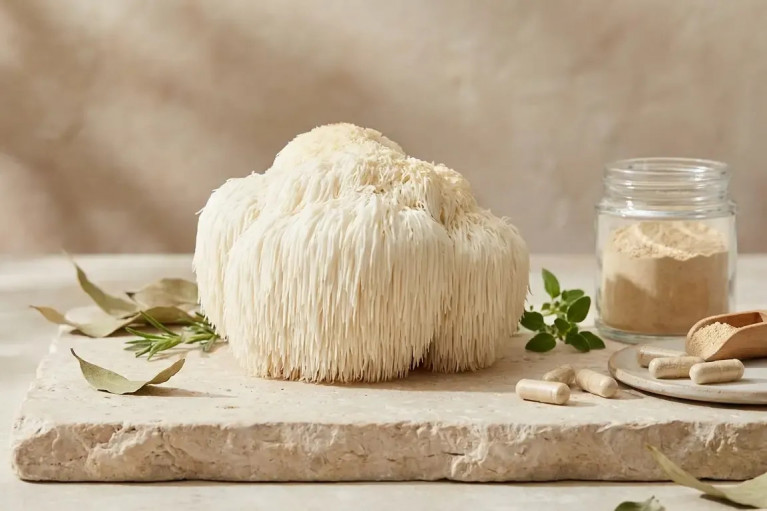
The dietary supplement industry continues to evolve as consumers look for new ways to support their everyday wellness routines. Among the ingredients attracting attention is lion’s mane mushroom, a functional mushroom traditionally used in food and wellness practices that has become increasingly popular in the supplement market. Known for its distinctive appearance and ongoing scientific interest, lion’s mane offers health brands an opportunity to explore a growing category while responding to consumer interest in cognitive wellness, focus, and overall well-being.
For supplement companies considering their next product launch, understanding lion’s mane goes beyond recognizing a trending ingredient. Brands must evaluate the available research, choose appropriate formulations, communicate benefits responsibly, and work with a manufacturer capable of supporting their product goals.
Why is Lion’s Mane Mushroom Gaining Popularity?
Lion’s mane (Hericium erinaceus) is an edible mushroom recognized by its long, white, cascading spines. Although it has a history of culinary use and traditional applications in East Asian wellness practices, it has gained more visibility in the modern supplement industry as consumers explore functional mushrooms.
The growing interest reflects several broader consumer trends. Shoppers are increasingly interested in ingredients with recognizable natural origins, science-informed wellness products, and supplements that fit into daily routines. Functional mushrooms, including lion’s mane, reishi, cordyceps, and turkey tail, have become part of this conversation.
Market forecasts also point to continued opportunities. A September 2026 report from Global Market Insights estimated the global lion’s mane mushroom supplements market at $503 million in 2025 and projected it could reach approximately $566 million in 2026. The report forecasts continued growth through 2035, although actual results will depend on consumer demand and market conditions.
For health brand owners, this presents an opportunity to evaluate lion’s mane as part of a broader product development strategy. However, market interest alone does not guarantee success. Product quality, transparency, differentiation, and responsible marketing remain essential.
What Are the Potential Benefits of Lion’s Mane?
Lion’s mane contains several biologically active compounds, including hericenones and erinacines, that researchers have investigated for their potential interactions with pathways involved in nerve growth and neurological function. The mushroom also contains polysaccharides and other compounds that contribute to its ongoing scientific interest.
Cognitive Wellness and Focus
Cognitive wellness is one of the most recognizable areas associated with lion’s mane supplementation. Researchers have investigated whether compounds found in the mushroom may influence processes involved in nerve cell function and cognitive performance.
Some small human studies have reported promising findings related to cognitive function. However, the available clinical evidence remains limited, and results cannot establish that lion’s mane supplements reliably improve memory, concentration, or other cognitive outcomes in the general population.
For brands, this distinction matters. There is an opportunity to educate consumers about the ingredient and the research behind it without presenting preliminary findings as proven results.
Mood and Everyday Well-Being
Researchers have also explored lion’s mane in studies involving mood and perceived stress. Some early findings are encouraging, but the number of human studies is small, and further research is necessary to establish meaningful benefits.
Brands should avoid treating these preliminary findings as proof that lion’s mane can manage anxiety, depression, or other medical conditions. Instead, product positioning should remain grounded in appropriate, substantiated dietary supplement claims.
General Wellness
Lion’s mane is also included in products designed for consumers interested in functional mushrooms and everyday wellness. Its naturally occurring compounds provide researchers with several avenues for further investigation, but proposed antioxidant, immune, and other physiological effects should not automatically be presented as demonstrated benefits in humans.
The takeaway for health brands is straightforward: scientific interest can help inform product education, but marketing language must reflect the strength of the evidence.
Choosing the Right Lion’s Mane Supplement Delivery Format
Once a brand identifies its target audience and product concept, the next step is selecting an appropriate formulation. Lion’s mane is available in several supplement formats, each with different considerations for manufacturing, packaging, and consumer use.
Capsules: Capsules offer a familiar, convenient option for consumers who prefer measured servings without mixing powders or preparing beverages. They can also be a practical starting point for brands entering the functional mushroom category.
Powders: Powder formulations appeal to consumers who want to incorporate supplements into smoothies, coffee, or other beverages. Brands pursuing this format should consider taste, texture, solubility, serving size, and the intended application.
Tablets: Tablets may suit brands seeking a compact, straightforward supplement format. Formulation requirements, ingredient characteristics, and manufacturing feasibility should be evaluated early in development.
Gummies: Gummies can offer a more approachable format for consumers who dislike swallowing capsules. However, lion’s mane formulations must account for ingredient compatibility, flavor, texture, moisture, and stability. The final product must also deliver the intended serving within practical size and formulation constraints.
Liquid supplements: Liquid extracts offer another route for brands looking to differentiate their products. Ingredient specifications, extraction details, packaging compatibility, and stability requirements are important considerations.
No single format is right for every brand. The best choice depends on the target consumer, desired serving size, budget, product positioning, and manufacturing capabilities.
Fruiting Bodies, Mycelium, and Ingredient Transparency
One important consideration in lion’s mane product development is the source material used in the formulation.
The fruiting body is the visible mushroom, while mycelium is the network of threadlike structures through which the fungus grows. Both have been studied, and their chemical compositions can differ. Research has investigated compounds such as hericenones in fruiting bodies and erinacines in certain mycelial preparations.
Brands should not assume that all lion’s mane ingredients are interchangeable. The source material, cultivation method, extraction process, and ingredient specifications can affect the composition of the finished ingredient.
When evaluating suppliers, ask for documentation that clearly identifies the material being supplied. Depending on the ingredient, relevant information may include botanical or fungal identity, extract specifications, testing methods, contaminant testing, and available data on relevant compounds.
Transparency is especially important when marketing a premium product. If a brand promotes a particular mushroom material, extraction method, or standardized constituent, it should be able to substantiate that description.
A higher extract ratio or a larger number on a label does not automatically establish superior quality or effectiveness. Health brands should prioritize reliable specifications and supporting documentation over marketing claims that cannot be adequately verified.
Safety and Responsible Product Positioning
Lion’s mane is commonly consumed as a food, but evidence regarding the long-term safety of concentrated supplements remains limited. Small clinical studies suggest that supplementation is generally tolerated by many participants, although reported side effects have included gastrointestinal discomfort, nausea, and skin rash. Allergic reactions are also a consideration.
Brands should account for these limitations when developing consumer education and product labeling. People who are pregnant or breastfeeding, have known mushroom allergies, or take medications should consult a qualified healthcare professional before using lion’s mane supplements, particularly because comprehensive safety and interaction data are lacking.
Marketing claims require equal care. In the United States, dietary supplements cannot be marketed as treatments or cures for diseases unless they meet applicable legal requirements. Claims about supporting normal body functions must be truthful, not misleading, and adequately substantiated.
For example, brands should avoid promising to prevent cognitive decline, treat depression, or reverse neurological damage. Research involving cells, animals, or small human populations does not establish that a finished supplement will deliver those outcomes.
A credible product story acknowledges what is known, explains what researchers are investigating, and avoids presenting uncertain findings as established facts. This approach can help build consumer trust while supporting responsible long-term brand growth.
Partnering With the Right Supplement Manufacturer
Turning a lion’s mane concept into a market-ready product requires more than sourcing an ingredient. Health brands must coordinate formulation, ingredient procurement, manufacturing, packaging, labeling, quality processes, and production planning.
Working with an experienced contract manufacturer can help simplify these steps. At Makers Nutrition, we work with health brands to develop and manufacture dietary supplements, offering support across product development, packaging, and fulfillment. Whether a company is exploring its first functional mushroom product or expanding an established supplement line, the right manufacturing partner can help evaluate practical options and move the project toward production.
Early collaboration is especially valuable when a formulation involves specialized extracts, multiple active ingredients, or a less conventional delivery format. Discussing ingredient specifications, serving-size requirements, flavor considerations, packaging, and production expectations before finalizing a concept can help identify challenges sooner.
Brands should also evaluate a manufacturer's quality systems, documentation practices, testing procedures, and ability to support their intended product format. Clear communication and realistic production planning are important parts of building a dependable supply chain.
At Makers Nutrition, our goal is to help brands navigate the manufacturing process while keeping their individual product goals in focus. From initial planning to finished-product packaging and fulfillment, having coordinated support can make launching a new supplement line more manageable.
The Future of Lion’s Mane Supplements
Lion’s mane offers health brands an opportunity to participate in the expanding conversation around functional mushrooms and cognitive wellness. Continued scientific investigation and consumer curiosity may support further category development, but long-term success will depend on more than popularity.
Brands that prioritize ingredient transparency, appropriate formulations, responsible claims, and consistent product quality can establish a stronger foundation for growth. By combining a clear market strategy with a capable manufacturing partner, supplement companies can explore lion’s mane thoughtfully and develop products that align with their customers' expectations.
For health brand owners considering their next launch, the opportunity is not simply to follow a trend. It is to create a well-developed, trustworthy supplement that gives consumers a clear understanding of what they are buying and why the product belongs in their wellness routine.