

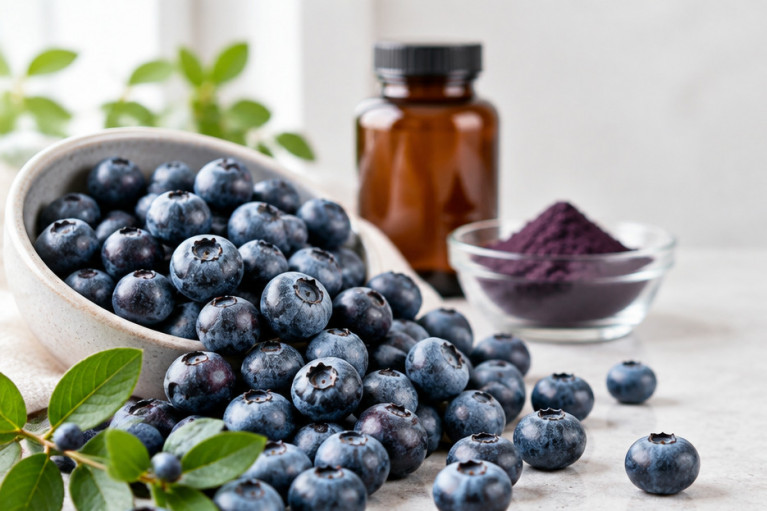
Few fruits have earned the reputation of the blueberry. They are colorful, convenient, naturally sweet and packed with compounds that researchers continue to investigate for their potential role in long-term health. While eating whole blueberries is an excellent way to incorporate these nutrients into a balanced diet, the science surrounding blueberry extract and its concentrated bioactive compounds is creating another opportunity: functional supplements designed around the benefits of this familiar fruit.
For supplement brands, blueberries represent an especially interesting ingredient because they sit at the intersection of several growing wellness categories. Brain health, cardiovascular wellness, healthy aging, antioxidant support and metabolic health are all areas where consumers are increasingly looking for science-backed ingredients.
Much of the attention centers on a group of plant compounds called anthocyanins. These naturally occurring pigments are responsible for the deep blue, purple and red colors found in many fruits and vegetables. Blueberries are particularly rich in anthocyanins, making them an appealing ingredient for supplement formulations.
And the research is getting more interesting.
What Makes Blueberries So Special?
Blueberries contain a variety of nutrients and phytochemicals, including vitamin C, vitamin K, fiber and numerous polyphenols. However, anthocyanins are among the compounds most closely associated with blueberry research.
Anthocyanins belong to the flavonoid family and have antioxidant and other biological activities that researchers are investigating for their potential effects throughout the body.
A major review of blueberry research published in Advances in Nutrition found that observational studies have associated regular blueberry or anthocyanin intake with cardiovascular health, metabolic health, healthy weight maintenance and neuroprotection. Human clinical research has also provided evidence of effects related to vascular and glucose-regulatory function.
That does not mean blueberries are a cure-all. Instead, it highlights why this simple fruit has become an increasingly interesting subject in nutrition and supplement research.
Brain Health and Cognitive Support
One of the most compelling areas of blueberry research is cognitive health.
Researchers have been interested in whether anthocyanins may support memory, attention and other aspects of cognitive performance. One proposed explanation is that these compounds may influence vascular function and blood flow, including blood flow to the brain.
A systematic review of randomized controlled studies involving berry anthocyanins found improvements in memory in several trials, with some studies also reporting improvements in attention, psychomotor speed and executive function. The review also found evidence supporting beneficial effects on certain measures of vascular function.
More recent research adds an important layer of nuance.
A 2026 systematic review and meta-analysis examined 14 randomized controlled trials involving 632 healthy participants. Researchers found that blueberry interventions significantly improved flow-mediated dilation, a measure of vascular function. However, they did not find significant improvements in blood pressure or overall cognitive performance in this particular healthy population.
That distinction matters.
The research does not support making broad claims that blueberries improve memory or prevent cognitive decline. What it does show is that anthocyanins and blueberries remain promising areas of research for brain and vascular health.
For supplement brands, that creates an opportunity for products positioned around healthy cognitive function, antioxidant support and healthy aging, while keeping claims appropriately supported.
Cardiovascular Health: Supporting the Blood Vessels
The cardiovascular potential of blueberries may be one of their most interesting applications.
Healthy blood vessels depend on proper endothelial function. The endothelium is the thin layer of cells lining the inside of blood vessels, and its function plays an important role in regulating circulation.
Research involving berry anthocyanins has found evidence of improvements in certain measures of endothelial function. The 2026 meta-analysis specifically found a significant improvement in flow-mediated dilation following blueberry interventions.
Earlier systematic research has also reported potential improvements in blood pressure and vascular function, although results have not been consistent across every study.
This is an important reminder that nutrition research is rarely black and white. Different studies use different blueberry preparations, doses, participant populations and intervention periods.
Still, the overall research makes blueberry-derived ingredients interesting for supplements targeting cardiovascular wellness and healthy circulation.
Antioxidant and Cellular Support
Blueberries are also widely recognized for their antioxidant potential.
Oxidative stress occurs when the production of reactive molecules exceeds the body's ability to manage them. Oxidative stress is a normal part of biology, but excessive oxidative stress is associated with a variety of processes involved in aging and chronic disease.
Anthocyanins and other polyphenols found in blueberries can participate in antioxidant pathways, which is one reason researchers continue to investigate their role in health and wellness.
For supplement brands, antioxidant support is also a versatile category. Blueberry ingredients can potentially complement formulas focused on healthy aging, beauty-from-within, cardiovascular wellness, cognitive support and general wellness.
Metabolic Health is Another Area to Watch
Blueberries may also have relevance to metabolic health.
Epidemiological research has associated regular consumption of blueberries and anthocyanin-rich foods with a lower risk of developing type 2 diabetes. Clinical studies have investigated whether blueberry and anthocyanin consumption can influence glucose regulation and related metabolic markers.
However, findings are not universally consistent.
A systematic review of berry anthocyanin interventions found that while there was evidence for some vascular and cognitive benefits, results involving metabolic risk markers such as carbohydrate and lipid metabolism were less consistent.
Therefore, blueberry extract may fit naturally into broader formulas designed around healthy metabolism, antioxidant protection and overall wellness.
Blueberry Extract vs. Eating Blueberries
If blueberries are so beneficial, why would someone take blueberry extract?
The answer is concentration and convenience.
A person can certainly obtain anthocyanins and other beneficial compounds by eating blueberries. Whole fruit also provides fiber, vitamins, minerals and other nutrients that an extract may not contain in the same quantities.
Supplements, however, can provide standardized amounts of selected compounds in a convenient format.
Depending on the ingredient, a blueberry extract may be standardized around anthocyanins or other polyphenolic compounds. Standardization can be particularly important for supplement brands because it provides greater consistency from batch to batch and gives formulators a clearer understanding of what the finished product contains.
This distinction is important for manufacturers and brand owners.
Not all blueberry extracts are interchangeable. The source material, extraction process, concentration, standardization and testing can all affect the final ingredient.
Opportunity for Supplement Brands
Blueberry is particularly attractive because it can support several different supplement concepts.
For example, a brand could develop a brain health formula combining blueberry anthocyanins with other ingredients commonly used for cognitive support.
A healthy aging formula could incorporate blueberry extract alongside other antioxidant-rich botanical ingredients.
A cardiovascular wellness formula could build around ingredients researched for circulation and endothelial support.
Blueberry can also work beautifully in powders, gummies, capsules and other convenient delivery formats.
The flavor profile creates an additional advantage for certain products. Blueberry naturally lends itself to gummies and powdered drink mixes, making it possible to build a supplement around both function and consumer experience.
That flexibility is increasingly important as consumers look for supplements that are easy to use and enjoyable enough to become part of a daily routine.
A Familiar Ingredient with Modern Potential
Blueberries may seem like an unlikely cutting-edge supplement ingredient because consumers have been eating them for generations. But that familiarity is actually part of their appeal.
Consumers already recognize blueberries as a nutritious food. Researchers are continuing to investigate their anthocyanins and other polyphenols. And supplement manufacturers have the ability to transform these compounds into convenient, standardized formulations.
The science is particularly interesting in areas such as vascular function, antioxidant activity, cognitive health and healthy aging. At the same time, the research demonstrates why responsible formulation and marketing matter. Some findings are encouraging, while others remain inconsistent or require additional human trials.
That balance is ultimately good for the supplement industry.
Today's consumers are more interested than ever in the science behind the products they purchase. Brands that can combine recognizable ingredients with thoughtful formulations and credible research have an opportunity to stand out.
At Makers Nutrition, we understand that developing a supplement starts with more than choosing an ingredient. It requires the right formulation, delivery format, manufacturing process, quality controls and finished product strategy.
For brands exploring blueberry extract, anthocyanin-rich formulas or the broader world of plant-based wellness ingredients, the possibilities extend far beyond the produce aisle.
Blueberries may be small, but their potential in modern supplement formulations is anything but.