

Introduction: The Demand for Collagen and the Need for Sourcing Clarity
Collagen is one of the most sought-after ingredients in today’s dietary supplement market. Used for everything from beauty enhancements to joint and bone health, collagen has become ubiquitous on retail shelves and online wellness stores. But despite its popularity, many brands embarking on private label collagen supplements have questions: where does collagen actually come from? What are its main sources, and how is it transformed into the powders, capsules, and gummies found in supplement aisles? Understanding the full journey of collagen—from source to finished product—is crucial for any brand looking to deliver quality, transparency, and market appeal.
Understanding Collagen: What Is It and Why Do Sources Matter?
Collagen is the most abundant protein in the animal kingdom, making up a significant part of skin, bones, tendons, and connective tissues. In supplements, collagen is hydrolyzed (broken down) for improved absorbability. Key to product quality and consumer confidence is knowing where the collagen comes from, how it’s processed, and what makes one source different from another. Collagen sourcing also has implications for efficacy, allergenicity, dietary restrictions, and consumer expectations.
Main Sources of Collagen: Bovine, Marine, Porcine, and Chicken
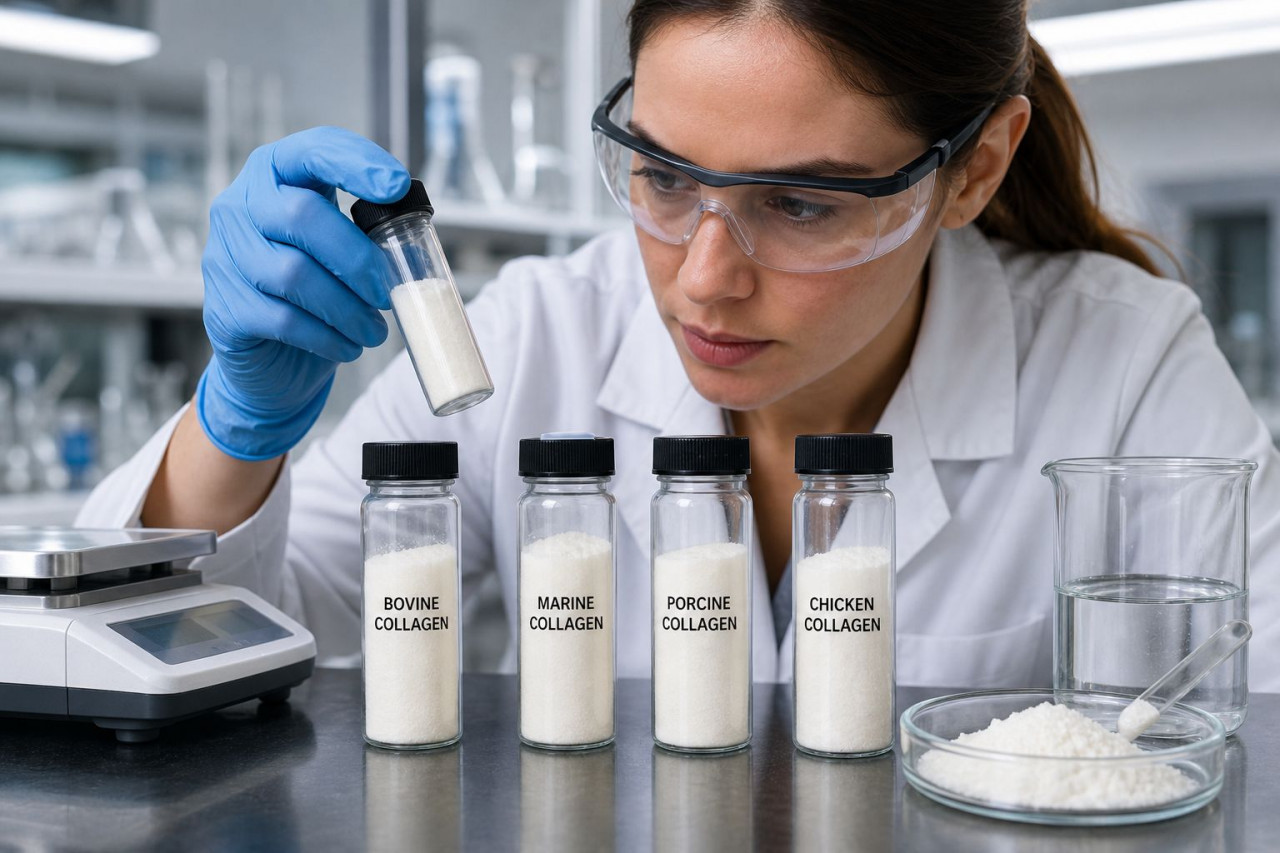
The majority of commercial collagen is derived from four main sources: bovine (cattle), marine (fish), porcine (pigs), and chicken. Understanding the distinctions between these sources, including benefits, potential drawbacks, and appropriate markets, will help you select the right collagen for your private label supplement.
Bovine Collagen
Source: Bovine collagen is extracted from the hides, bones, and connective tissues of cows. It’s the most widely used collagen type in the supplement market due to its abundance and versatile amino acid profile.
Benefits:
- Rich in Types I and III collagen, which are vital for skin, bone, and muscle health.
- Usually sourced from grass-fed and pasture-raised cattle for superior quality, especially in the U.S. and Europe.
- Generally affordable and readily available in bulk.
Potential Drawbacks:
- Not suitable for vegetarians, vegans, or consumers avoiding bovine products (for religious or personal reasons).
- May trigger allergies in individuals sensitive to beef.
- Perception of ‘factory farming’ can impact brand acceptance.
Marine Collagen
Source: Marine collagen is primarily sourced from the skin and scales of fish like cod, tilapia, and snapper. It’s prized for its purity and sustainability, especially when wild-caught fish are used.
Benefits:
- Primarily Type I collagen, optimal for skin, hair, and nail health.
- Features superior bioavailability; marine collagen peptides are generally smaller and easier for the body to absorb.
- Popular for pescatarians, flexitarians, and consumers avoiding land animal products for religious or dietary reasons.
- Lower risk of transmissible animal diseases compared to land animals.
Potential Drawbacks:
- Potential for marine allergens (shellfish, fish proteins).
- Typically more expensive than bovine collagen.
- Fishy taste or odor may need to be masked during formulation.
Porcine Collagen
Source: Derived from the skin and bones of pigs, porcine collagen is less commonly discussed in consumer markets but is widely used in ingredients manufacturing worldwide.
Benefits:
- A good source of both Type I and Type III collagen.
- Affordable and plentiful in supply, especially in some global markets.
Potential Drawbacks:
- Not suitable for kosher, halal, or vegetarian consumers due to religious and personal dietary restrictions.
- Similar allergy concerns as with other animal-based collagens.
- May face perception issues in Western markets where consumers often prefer bovine or marine collagen.
Chicken Collagen
Source: Extracted mainly from the cartilage, bones, and sometimes skin of chickens, chicken collagen is a key source of Type II collagen—a form especially relevant for joint and cartilage health.
Benefits:
- High in Type II collagen, which is favored for joint support formulations.
- Often used in specialized supplements for joint, cartilage and connective tissue support.
- Popular for targeted health markets such as aging and athletic populations.
Potential Drawbacks:
- Allergenic potential for those with egg or poultry allergies.
- Perception and sourcing issues may arise around conventional versus free-range chicken.
How is Collagen Made? The Hydrolysis Process
Regardless of source, the collagen used in supplements undergoes extensive processing to make it suitable for human consumption and bioavailability. This is done through a process called hydrolysis.
Step 1: Collection and Cleaning
Collagen-rich animal parts are collected, thoroughly cleaned, and sterilized. This step is critical for ensuring the safety, purity, and traceability of the raw materials.
Step 2: Extraction
The cleaned materials undergo heat or enzymatic treatment to ‘break out’ the collagen protein from bones, skin, or cartilage. The specific method depends on the source and the manufacturer’s technologies.
Step 3: Hydrolysis
Collagen molecules are naturally too large to be easily digested. Through hydrolysis, these long protein chains are broken down with water and enzymes into smaller peptides, which are more bioavailable and easier to absorb in the human body. The product at this stage is known as ‘hydrolyzed collagen’ or ‘collagen peptides’ and is the form most often found in dietary supplements.
Step 4: Filtration and Drying
The hydrolyzed collagen is filtered to remove any impurities or residues, then dried (typically through spray drying) into a fine powder. The resulting collagen peptides are now ready for use in various supplement formats—powders, capsules, tablets, gummies, and drinks.
For an in-depth look at the manufacturing steps and quality controls in collagen supplement production, visit our comprehensive collagen manufacturer guide.
How to Choose the Right Collagen Source for Your Private Label Supplement
Selecting the appropriate collagen source for your private label supplement is not just a technical decision—it’s a strategic one. Here are the key considerations:
- Market Demographics: What are your target audience’s dietary needs and ethical preferences? For example, marine collagen is suitable for pescatarians, while chicken collagen may be best for joint-support products for active or aging populations.
- Cultural and Religious Restrictions: Consider kosher, halal, and other religious or cultural dietary laws. These may preclude bovine or porcine sources (or require special certification).
- Label Claims and Certifications: If marketing on ‘grass-fed,’ ‘wild-caught,’ ‘non-GMO,’ or ‘organic’ claims, ensure sourcing documents and certifications are available from your manufacturer.
- Consumer Allergens: Fish, shellfish, chicken, and beef are all potential allergens. Assess the ingredients and potential cross-contaminants for your target customers.
- Cost and Availability: Marine and grass-fed bovine collagen may command premium prices. Balance quality and cost with your market segment’s expectations.
- Formulation Needs: Match the collagen ‘type’ (I, II, III) to your supplement claims—Type I for skin and beauty, Type II for joint health, and so on.
Questions to Ask Your Collagen Manufacturer
- What is the exact species and origin of the collagen?
- Are certifications for organic, grass-fed, sustainable, kosher, or halal available?
- Is the product tested for contaminants such as heavy metals or pathogens?
- What hydrolysis processes are used (enzymatic, acid, or others)?
- Is the facility GMP-certified and compliant with international quality standards?
If you’re exploring contract manufacturing for your private label collagen supplement, you can learn more at our collagen manufacturer resource page, which details sourcing partnerships and industry standards.
Collagen Sourcing FAQ
Which collagen type should I choose for beauty versus joint support?
Type I collagen (from bovine and marine sources) is most common in beauty and skin health supplements. Type II collagen (usually from chicken) is preferred for joint health formulations.
Are there vegetarian or vegan alternatives to animal-derived collagen?
Collagen itself is only found in animals, but some plant-based supplements use ‘collagen builders’ like vitamin C, silica, and amino acids to support natural collagen production. If you wish to serve vegan audiences, offer these as alternatives—making clear that they do not contain actual collagen peptides.
How can I verify the quality of the collagen source?
Request documentation: certificates of analysis (COAs), supplier declarations, and third-party testing for contaminants and heavy metals. Work with certified, reputable manufacturers who provide full transparency.
Is marine collagen more sustainable?
Marine collagen can be highly sustainable if sourced from wild, responsibly caught fish and if it utilizes byproducts that would otherwise go to waste. Ask suppliers about their fishing and sustainability policies, and look for eco-certifications where available.
Do all sources undergo hydrolysis?
Yes. Any collagen destined for dietary supplement use is hydrolyzed to some extent to improve safety, bioavailability, and absorption. Always select hydrolyzed collagen (peptides) for optimal consumer benefits.
Building Trust through Transparent Collagen Sourcing
Today’s consumers are informed and increasingly focused on transparency, cleanliness, and ethical sourcing. Whether you’re crafting a beauty collagen for retail or a specialty formula for joint support, clearly communicating your product’s origin builds essential brand trust. Work with manufacturers who offer not just collagen, but traceability, responsible sourcing, and quality documentation.
To learn more about Makers Nutrition’s leadership in private label collagen sourcing and manufacturing, check out our dedicated collagen manufacturing resource.